Sunday, January 6, 2008

2007 Technology of the Year Awards: App Dev

The best and most innovative products in business rules management, AJAX toolkits, Java test tools, and more.


Fair Isaac Blaze Advisor 6.1 [Best Business Rule Management System]
Blaze Advisor 6.1's major enhancements include richer reporting and increased speed, and the newly incorporated Rete III algorithm enables it to surpass old rival JRules in performance benchmarks. Blaze still provides a wealth of tools for implementation, extensive debugging, and strong factory support. The improvements make it the top enterprise BRMS.

Sun NetBeans 5.5 [Java IDE Innovator]
NetBeans already had the most complete collaboration features among IDE platforms. This year it added important new modules such as Matisse, the most advanced Java GUI designer available today, and complete support for Java EE 5. NetBeans is likely all that developers of enterprise Java applications will need.

Parasoft Jtest 8 [Best Java Test Tool]
Jtest was already a great Java testing tool; now it's even better. Version 8 adds more pre-loaded rules and the new BugDetective analysis module for locating problems and identifying their origin. It takes on everything from unit tests to functional tests, and it does not limit your testing of any particular Java component.

Klocwork K7 v. 7 [Best Source Code Analyzer]
Klocwork K7 is a robust and scalable analytical suite for C, C++, and Java, featuring excellent defect discovery and extensive tools for managing the many results. In addition, it provides superior code navigation and analysis tools. This is a comprehensive and very impressive package.

Backbase 3.2 [Best AJAX Toolkit]
Backbase is a smooth, crisp collection of widgets with a nice, modern look. Coding amounts to dropping together XML tags to specify everything from the event routines to the layouts. Server-side support is tightly integrated with Java platforms such as JSF and Struts. Impressive tool, elegant results.

Dojo Toolkit [Best Open Source AJAX Kit]
Dojo has an excellent editing package, a wide selection of animating boxes, some drag-and-drop tools, and a slew of customizable widgets. It's a broad, deep, and well-packaged open source AJAX project, and it continues to improve as it attracts more developers with more ideas and code from other projects.

Adobe Flex 2.0 [Best Rich Internet Application Platform]
Adobe Flex 2.0 constitutes a big leap forward for this RIA platform, thanks to a new Eclipse-based IDE for drag-and-drop layout and code management, and a separate data services application for server-side messaging and data integration. Easy connections for Web services and Java objects bolster this very good choice for enterprise RIA scenarios.

http://www.infoworld.com/slideshow/2007/01/25-2007_technology-1.html

Saturday, January 5, 2008

Best and Worst in Tech :: 101 Best Web Freebies


1. Load Up Your PC - Ubuntu, OpenOffice.org, Pandora Recovery, Libra

2. Safeguard Your System - AVG Anti-Virus Free, SpyBot

3. Home on the Web - divShare, T35 Hosting, WordPress

4. Phone Home - Skype, Gizmo Project, The Pudding

5. Manage Your Money - Mint (Personal accounting software), Freerealtime.com

6. File Your Taxes - TaxACT This Web-based tax software is part of the Internal Revenue Service's Free File program. But unlike other IRS partners who limit free filing services to those with incomes of $54,000 or less, TaxACT is open to all.

7. Credit Check - AnnualCreditReport.com The Fair & Accurate Credit Transactions Act of 2003 gave all consumers the right to access their credit reports once every 12 months. The Act also created AnnualCreditReport.com to simplify the process of applying to credit reporting agencies.

8. Play the Housing Market - Zillow.com, Trulia

9. Land a Job - Emurse, Indeed

10. Raise Salary - Salary.com Have a hunch you're underpaid? Who doesn't? Before you go to the boss, get some hard evidence at Salary.com. The site will show you what others with similar job titles and geographic locations are earning, based on survey data.

http://www.businessweek.com/technology/content/nov2007/tc20071121_708667.htm

Thursday, December 20, 2007

5 (from 50) of the Brightest Minds in Business

Sergey Brin1. Sergey Brin :: Co-founder of Google
Succeed With Simplicity

Simplicity is an important trend we are focused on. Technology has this way of becoming overly complex, but simplicity was one of the reasons that people gravitated to Google initially. This complexity is an issue that has to be solved for online technologies, for devices, for computers, and it's very difficult. Success will come from simplicity. Look at Apple, the success they have had, and what they are doing.
We are focused on features, not products. We eliminated future products that would have made the complexity problem worse. We don't want to have 20 different products that work in 20 different ways. I was getting lost at our site keeping track of everything. I would rather have a smaller set of products that have a shared set of features.

Chris DeWolfe2. Chris DeWolfe :: Co-founder, Myspace
Keep Social Networks Social

The key is to be true to your community's norms and values. You can't just force yourself on people and try to sell them something they don't want - that's good advice for marketers generally, but particularly on community-driven sites like MySpace. You have to find ways to add value to your members' lives while being consistent with your brand's identity.


3. Rachael RayChef :: Author, and Entrepreneur
Turn Your Passion Into an Empire

You have to be open-minded when those early opportunities present themselves. Take advantage of them, whether they're going to make you a lot of money or not. I did 30 Minute Meals for five years on local television, and I earned nothing the first two years. Then I earned $50 a segment. I spent more than that on gas and groceries, but I really enjoyed making the show and I loved going to a viewer's house each week. I knew I enjoyed it, so I stuck with it even though it cost me.
I've also learned that you can't be all things to all people. Whatever it is that you're successful at, that has to be the No. 1 goal. In my case, it's accessibility. So all of my products have to be usable, accessible, affordable. The olive oils we're developing with Colavita will be priced to be competitive with every other affordable olive oil. We chose to be in grocery stores, not fancy food stores, because that's where most of my audience shops. Our pots and pans have to be heavy-bottomed and sturdy but also affordable. Decide what it is that you are and then stay true to that thing. My brand is based very much on how I live my day-to-day life.

4. Richard Branson :: Founder and Chairman, Virgin Group
Learn How to Say No (Even if You're Known as "Dr. Yes")

I turn people down with extreme difficulty sometimes, because the people I'm saying no to are people I don't want to discourage. And it should be difficult. Saying no shouldn't be an easy thing to do, and you have to be good at it. I often used to dodge doing it myself, and hide behind other people and delegate it, but if you're the boss, that isn't the right thing to do.
I remember when I was a 15-year-old asking Vanessa Redgrave or James Baldwin for an interview, and the fact that they took the time to respond meant an enormous amount to me. It inspired me. So it's extremely important to respond to people, and to give them encouragement if you're a leader. And if you're actually turning people down, if you must say no, whether it's for a job or a promotion or an idea they're proposing to you, take the time to do it yourself.
I met two big San Francisco entrepreneurs recently, and they said they get e-mail like this too, but they just dump it all in the dustbin. They don't try to answer at all. I asked them why, and they said, "The time we spend responding could be used to create something of value for our business." That may well be pragmatically right, but I still think it's morally wrong, and I suspect that anything that is morally wrong is ultimately bad for business.

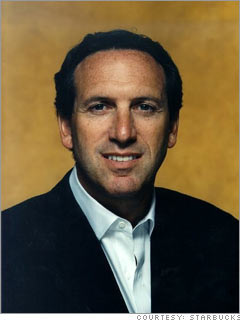
5. Howard Schultz :: Chairman, Starbucks
Dare to Be a Social Entrepreneur

The rules of engagement around building a brand have changed significantly over the past 10 to 15 years. Where companies at one time could spread their message through traditional marketing, consumers now seek an enduring emotional connection with the companies they patronize. The foundation of that connection is the most important characteristic of building a world-class brand: trust. Trust with your people and trust with your customers.
In the early years, we tried everything we could to exceed the expectations of our customers. But we knew that to achieve that goal we had to first exceed the expectations of our people. That was never more evident than in 1990, while we were still a private company that had yet to turn a profit. That was when we provided comprehensive health care to all of our employees, including part-timers. We also passionately believed that our people should share in Starbucks's success through ownership in the form of stock options - what we call "bean stock." It's hard to imagine advocating such expenses while we were building the business. This was not an expense but rather an investment.
Growth can cover up a lot of mistakes, and it has an intoxicating quality that sometimes makes it hard to see the need to continue to make investments ahead of the growth curve. Think of investments in your company as a metaphor for building a 100-story tower: You need to first lay a solid foundation to support future growth.

Reference: CNN Money
URL: http://money.cnn.com/popups/2006/biz2/howtosucceed/index.html

Wednesday, December 19, 2007

6-20 of the brightest minds in business

20. Nancy Pelosi :: Democratic leader and speaker-designate, U.S. House of Representatives [Share the Credit]

19. Vinod Khosla :: Founder, Khosla Ventures [Compel Investors to Go Green]

18. Reed Hastings :: Co-founder and CEO, Netflix [Turn Your Biggest Weakness Into Your Greatest Asset]

17. Donald Trump :: Chairman, Trump Organization [Obsess About Solutions, Not Problems]

16. Muhammad Yunus :: Founder, Grameen Bank; Winner, 2006 Nobel Peace Prize [Seek Big Rewards in Small Ideas]

15. Edgar Bronfman Jr. :: CEO, Warner Music Group [Turn Gripe Sessions Into Brainstorms]

14. Carly Fiorina :: Former Chairman and CEO, Hewlett-Packard [Turn a Setback Into a Comeback]

13. Stephen Covey :: Vice Chairman, FranklinCovey; Author, The 7 habits of Highly Effective People [Strive for Moral Authority]

12. Eric Schmidt :: CEO, Google [Succeed with Simplicity]

11. Kevin Rose :: Founder, Digg [Let the Users Run the Show]

10. Andre Agassi :: Co-founder, Agassi Graf Development [Stage a Great Second Act]

9. Michael Dell :: Founder and Chairman, Dell Computer [Think Big]

8. Michael Scott :: Regional Manager, Dunder-Mifflin Paper Co. [Avoid a Staff Mutiny (With Chocolate, if Necessary)]

7. Anne Mulcahy :: Chairman and CEO, Xerox [Stay True to Your Values]

6. Chad Hurley :: Co-founder, YouTube [Give Your Startup a Fighting Chance]

Reference: CNN Money
URL: http://money.cnn.com/magazines/business2/jobs/2007/

Tuesday, December 18, 2007

Lessons in Funding

Ben & Jerry's
Funding: Personal Savings and Loans
How It Started: Friends Ben Cohen and Jerry Greenfield wanted a job they considered fun. They moved to Burlington, Vt. and completed a five dollar correspondence course in ice cream making from Pennsylvania State University. They borrowed $4000 and came up with a total of $12,000 start up money.

Google
Funding: Credit Cards and Investors
How It Started: Founders Larry Page and Sergey Brin maxed out their credit cards for computers and office equipment, building Google's first data center in Larry's dorm. But since they needed more cash to move out of the dorm, the duo turned to an investor. Andy Bechtolsheim, one of the founders of Sun Microsystems and friend of a Stanford faculty member, wrote a check for $100,000 to Google after only seeing a short demo.

Apple
Funding: Sold Personal Possessions
How It Started: Co-founders Steve Jobs and Steve Wozniak, both college dropouts, began their partnership by selling boxes they built that allowed for free long-distance phone calls. In 1976, they started working on another box, the Apple I computer. Jobs and Wozniak sold their most valuable possessions, a van and two calculators, raising $1,300 to fund the company.

Mrs. Fields
Funding: Business Loan
How It Started: Despite numerous warnings of certain failure, Debbi Fields wanted to start a cookie business. Debbi and her husband, Randy, turned their home mortgage lender for financial backing. Debbi wrote in her book that the bank "trusted us, not cookies." Although he expected the cookie business to fail, their banker Ed Sullivan trusted the young couple to pay back a business loan.

Under Armour
Funding: Credit Card and Personal Savings
How It Started: Kevin Plank had about $20,000 in the bank when Under Armour started. For more funding, he accumulated over $40,000 in credit card debt spread across five cards. In the summer of 1997, he was so broke that he went to his mom's house for dinners.

Pink's Famous Hotdogs
Funding: Loan
How It Started: Paul and Betty Pink borrowed $50 to buy a hotdog cart. They sold 10-cent chilli dogs at the corner of Brea and Melrose. Sixty years later, daughter-in-law Gloria Pink, decided to market Pink's Los Angeles roots and raise the eatery?s profile. This family business, affectionately called "the little hot dog stand that could," now sells 1,500 hotdogs a day, in addition to burgers, Grape Crush and fries, bringing in $2.5 million per year in revenue.

Calvin Klein
Funding: Loans and Awards
How It Started: When Calvin Klein's childhood friend loaned him $10,000 in start-up money, Klein rented a dingy showroom to exhibit a small line of samples. The vice-president of Bonwit Teller stopped at the wrong floor of the building, liked what he saw and invited Klein to bring his samples to the president's office. Klein wheeled the rack of clothes uptown personally, winning $50,000 on the spot.

Meebo
Funding: Credit Cards and Venture Capitalists
How It Started: Instead of looking for venture capitalists, Seth Sternberg, Sandy Jen and Elaine Wherry funded Meebo in 2005 with credit cards. They each accumulated $2,000 in credit card debt, which was enough to cover their biggest expenses -- a few computer servers at $120 a month each. Later, they received funding by Sequoia Capital and Draper Fisher Jurvetson.

Crate & Barrel
Funding: Personal Savings and Family Loan
How It Started: Rumor has it that while admiring inexpensive dishes purchased on a European vacation, Gordon Segal was inspired to open Crate and Barrel. Gordon and Carole Segal went into business with their life savings of $12,000, plus $5,000 borrowed from Gordon's father. From humble beginnings, the chain is now a household name.

Nantucket Nectars
Funding: Working Odd Jobs
How It Started: Tom First and Tom Scott funded their first large production with personal savings and a family loan. They mass produced 1,400 cases of their beverages at a cost of $9,000. Shortly after starting their company, the Toms found themselves short on cash. To keep the business running, the two juggled odd jobs such as delivering bread, shucking and shipping scallops and pumping waste.

1-800-Flowers
Funding: Loans From Family and Friends
How It Started: James McCann was involved in social work as the administrator of a youth home in Rockaway, NY. In order to supplement his income, he procured $10,000 in loans from family and friends to purchase Flora Plenty, a small flower shop. He transformed this small struggling business into an international operation.

http://smallbusiness.aol.com/features/funding

Wednesday, December 12, 2007

Make Money by Feeding Your Amazon in the Blog

Hey! Who has affiliate program with Amazon? Let's try it!

1. Edit blog' layout

2. Click -> "Add a Page Element"

3. Select -> "Feed"

4. Find category of product you would present

5. Input URL of feeds at "feeds URL"
Example: http://www.amazon.com/rss/tag/electronics/popular?length=5&tag=popstore-20

6. Change Title of Feed -> Bestsellers :: Electronics

7. Save it!

Just easy 7 steps, you can earn from Amazon.com

Tuesday, December 11, 2007

Best Places to Live in Rural America


No. 1: Barren County,Kentucky
Barren County is the kind of place where people come, like what they see, then decide to call it home. With its rolling farmland and friendly residents, there's little reason to wonder why. ... [And] while many rural areas have struggled to attract commerce, businesses here are thriving.


No. 2: Warren County, Pennsylvania
Warren County is the kind of place that seems custom-made for every season on the calendar. It's tucked underneath the New York-Pennsylvania state line and just an hour or so from the lakeside town of Erie. A river runs through it -- the Allegheny -- strikingly picturesque at every bend.


No. 3: Randolph,Illinois
There's a lot to smile about in this southwestern Illinois county. Located an hour south of St. Louis, its western border hugs the banks of the mighty Mississippi River. Travel along the Great River Road and you'll see fertile river bottoms planted to corn, soybeans and wheat that abruptly stop below towering limestone bluffs.


No. 4: Gillespie,Texas
In many ways, Gillespie County is the kind of place you think of when you picture Texas: lots of wide-open spaces, cattle ranches, old men in cowboy hats. Even the major highways have cattle crossings. But in other ways, it surprises: this county is more well-known for citrus than cattle.


No. 5: Union County,South Dakota
Fly over Union County, S.D., some misty morning and you get a perspective on what makes this a special place to live. Down south you'll see where the Missouri River and the Big Sioux River merge, creating flat, fertile farmland that is the county's economic anchor.


No. 6: St. LawrenceNew York
In this one county -- and granted, it is one of the biggest counties in the United States -- you'll find a wonderful mix of attractions: traditional arts, great hunting and fishing, an outstanding collection of Frederic Remington artwork.


No. 7: Sac County, Iowa
If the sight of golden corn on rolling hills in summer evening sunlight doesn't make your heart glad, Sac County, Iowa, might not be the place for you. ... And if you don't like friendly people who know how to get things done, don't slow down when you see the Sac County highway signs.


No. 8: Garfield, Oklahoma
Eighty-five miles from Oklahoma City and 120 miles from Tulsa, Garfield County is largely an agricultural region -- wheat and cattle. The countryside around county seat Enid is dotted with horse pastures and folks living on acreages.


No. 9: Amador County,California
To the southwest are the towns of Amador City, Drytown and Sutter Creek, along with the county seat of Jackson and small farms and ranches. The low-slung buildings and storefronts along the main streets evoke the Wild West.


No. 10: Polk County,North Carolina
Hip, trendy Asheville is just 30 minutes to the north ... And yet this little cluster of communities, tucked into the foothills of the Appalachians, has somehow gone unnoticed. Consider this: Polk County does not have a Wal-Mart.

http://money.aol.com/progfarmer/realestate/bestrural2006?photo=2